The transition from the lecture hall to the public podium is often cited as the most nerve-wracking journey a university student can take. While the silent labor of drafting a term paper feels safe behind a glowing laptop screen, the act of vocalizing those ideas introduces a level of vulnerability that few other academic tasks require. However, the secret that top-performing students eventually discover is that these two skills—writing and speaking—are not separate silos. They are two sides of the same intellectual coin. Mastering the art of the “polished paper” provides the structural backbone for a great speech, while the agility of public speaking breathes life into stagnant academic prose.
The modern academic landscape is shifting away from purely written assessments toward a more holistic demonstration of competence. Today’s undergraduate is expected to be a polymath: a researcher, a writer, and a persuasive orator. When the pressure of these overlapping deadlines becomes unmanageable, many students seek professional guidance to do my assignment through MyAssignmentHelp effectively, allowing them to focus on high-priority projects like oral defense or internship presentations. Understanding how to bridge the gap between these mediums is the key to not just surviving, but thriving in a competitive global environment.
The Symbiosis of Speech and Script
At their core, both a 2,000-word essay and a five-minute speech rely on the same fundamental pillar: a clear, defensible thesis. In a paper, you have the luxury of footnotes and complex parentheticals to guide your reader. In a speech, your audience only has your voice and your pacing. This constraint is actually a gift for your writing. If you cannot explain your essay’s core argument in a thirty-second “elevator pitch,” the paper itself is likely too convoluted.
Writing for the ear teaches you the value of rhythm. When you read your assignment drafts aloud, you catch the clunky transitions and the “word salad” that often plagues undergraduate submissions. Conversely, the rigorous research required for a polished paper ensures that when you step onto the podium, you aren’t just speaking from a place of charisma, but from a foundation of verified evidence.
Navigating the Challenges of Oral Communication
For many, the most daunting aspect of communication is spontaneity. Whether it is a Q&A session following a presentation or a formal debate, the ability to think on your feet is a “power skill” that employers value more than almost any other. Developing confidence in these high-stakes moments starts with consistent practice; reviewing a curated list of extemporaneous speech topics at MyAssignmentHelp can help students sharpen their mental reflexes and build essential rhetorical skills for any academic setting.
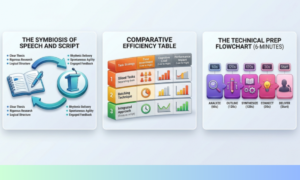
| Skill Component | Impact on Writing | Impact on Speaking |
| Clarity | Reduces “fluff” and focuses on the thesis. | Ensures the audience follows the logic. |
| Structure | Creates a logical flow between paragraphs. | Prevents rambling and circular arguments. |
| Engagement | Uses active voice to keep the reader interested. | Uses tone and body language to hold attention. |
| Evidence | Builds credibility (Ethos) through citations. | Provides the “heft” behind the spoken word. |
The “Polished Paper” Framework
A paper that truly shines is one that respects the reader’s time. Undergraduates often fall into the trap of using overly academic jargon to sound “smarter,” but true expertise is the ability to explain complex concepts simply. This is the hallmark of a global tone—writing that is accessible to a peer in London, Singapore, or New York.
To achieve this, focus on the “Information Gain” principle. Don’t just summarize what others have said; synthesize that information to offer a fresh perspective. Use data visualizations or technical diagrams to break up long blocks of text. For example, a flowchart illustrating your research methodology can often communicate more in ten seconds than three paragraphs of dense description.
Strategic Time Management for Dual Tasks
One of the biggest hurdles in mastering both speeches and papers is the sheer volume of work. The cognitive load required to switch from “research mode” to “rehearsal mode” is significant. To manage this, try the “Batching Technique.” Spend your mornings on the heavy lifting of data collection and citation for your papers. Use your afternoons—when energy levels often dip—to practice your delivery or brainstorm speech topics.
By treating your assignments as drafts for potential presentations, you reduce the total amount of unique work you have to do. Every essay is a potential script; every speech is a potential abstract for a future project. This integrated approach not only saves time but also reinforces your learning through repetition across different sensory channels.
Conclusion: The Future of Academic Excellence
In an era where information is ubiquitous, the value of a student lies in their ability to curate, analyze, and communicate that information. The “podium” is no longer just a physical wooden desk in a lecture hall; it is any platform where your ideas are shared. By focusing on the synergy between your written assignments and your spoken words, you develop a versatile toolkit that will serve you long after you’ve turned in your final capstone project.
Frequently Asked Questions (FAQ)
1. How can I make my academic writing sound more natural?
Ans: The best way is to read your work aloud. If you find yourself running out of breath before the end of a sentence, the sentence is too long. Aim for a mix of short, punchy statements and longer, explanatory ones.
2. What is the biggest mistake students make in public speaking?
Ans: Over-preparing a script. If you try to memorize every word, you lose the ability to engage with the audience. Instead, memorize your opening, your closing, and your three main points. Use bullet points for the rest.
3. Why is “Information Gain” important for SEO and ranking?
Ans: Google prioritizes content that adds something new to the conversation. If your article just repeats what is already on Wikipedia, it won’t rank. Unique insights, personal experiences, and original tables help your content stand out.
4. How do I choose a good speech topic?
Ans: Choose something that sits at the intersection of your personal interest and current global trends. It should be narrow enough to cover in five minutes but broad enough to have available research data.
Resources for Student Success
- Toastmasters International: A global organization dedicated to helping people improve their public speaking.
- Grammarly Blog: Great for learning about tone, clarity, and avoiding common grammatical pitfalls.
- Google Scholar: The essential tool for finding peer-reviewed sources to back up your assignments and speeches.
About The Author
I’m Lucy Wilson, a senior academic consultant and content strategist at MyAssignmentHelp, where I focus on bridging the gap between classroom theory and professional communication. With over a decade of experience in educational mentorship, I specialize in helping undergraduate students refine their rhetorical skills—whether they are drafting complex technical papers or mastering the art of public speaking.