Losing a home through foreclosure can be financially and emotionally difficult. After a foreclosure sale, many homeowners want to know whether there is still a way to recover the property. The answer depends on several factors, including the state where the property is located, the type of foreclosure, whether the sale has been completed, and whether state law provides a right of redemption.
If you are researching How to Get Your House Back After Foreclosure Sale, it is important to understand that there is no single rule that applies throughout the United States. Some states provide a statutory right of redemption after a foreclosure sale, while others do not provide a general post-sale redemption right. The deadline and requirements can also vary.
What Happens After a Foreclosure Sale?
A foreclosure sale is the point at which a foreclosed property is generally sold, often through a public auction. The exact process depends on state law and whether the foreclosure is judicial or non-judicial.
After the sale, additional steps may be required to complete the transfer of the property to the successful bidder. The former homeowner’s rights also depend on the applicable state laws and the status of the foreclosure.
Understanding the Foreclosure Sale Process
Foreclosure generally occurs when a lender takes legal action to enforce its security interest in a property after the borrower fails to meet mortgage obligations. States generally use one of two main foreclosure procedures. A judicial foreclosure involves a court case, while a non-judicial foreclosure generally follows a legally established process without a foreclosure lawsuit.
What Happens to the Property After the Sale?
After a foreclosure sale, the successful bidder may become entitled to the property under the applicable legal process. However, the sale may be followed by additional steps involving the deed, title, confirmation of the sale, possession, or eviction.
The former homeowner should therefore determine whether the sale has been completed and whether title has transferred. Ownership and possession are also separate issues. A person may still be physically living in a property after a foreclosure sale without necessarily retaining ownership of How to Get Your House Back After Foreclosure Sale.
Why the Timing After a Foreclosure Sale Matters
Timing can be extremely important after foreclosure. If state law provides a redemption period, there may be a limited period in which an eligible former homeowner can reclaim the property.
Other legal deadlines may also apply to challenges, appeals, court filings, or possession. Because deadlines vary by state and circumstance, homeowners should review their foreclosure documents and obtain professional advice as soon as possible rather than assuming they have unlimited time.
Can You Get Your House Back After a Foreclosure Sale?
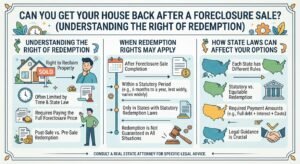
In some situations, a homeowner may have a legal way to recover a property after a foreclosure sale. The most important possibility to investigate is a statutory right of redemption. A statutory right of redemption is created by law and may allow an eligible former homeowner to reclaim the property after the foreclosure sale by meeting specific legal requirements.
However, this right does not exist in the same form everywhere. Some states provide post-sale redemption rights, while others do not provide a general statutory right of redemption after a foreclosure sale.
Understanding the Right of Redemption
The term “right of redemption” can refer to different legal concepts. An equitable right of redemption generally concerns the ability of a borrower to cure the mortgage default and prevent the loss of the property before foreclosure reaches the stage at which that right is terminated.
A statutory right of redemption is different. How to Get Your House Back After Foreclosure Sale is created by legislation and may allow an eligible person to reclaim the property after a foreclosure sale. When a post-sale statutory right exists, the law determines who can exercise it, how much must be paid, how the process must be completed, and how long the person has to act.
When Redemption Rights May Apply
Whether redemption is available depends on the law governing the property and the circumstances of the foreclosure. In jurisdictions that recognize a post-sale redemption right, the former homeowner may have to pay an amount established by law. Depending on the applicable rules, this can involve the foreclosure sale price, interest, costs, or other legally specified amounts.
The exact calculation should not be guessed. A homeowner should obtain an official payoff or redemption figure and confirm the applicable requirements.
How State Laws Can Affect Your Options
State law is one of the most important considerations when determining How to Get Your House Back After Foreclosure Sale. Foreclosure procedures differ among states, and redemption laws differ as well. The type of foreclosure can also affect the rights available after the sale.
This means information that is accurate for one state may be completely different for another state. Homeowners should identify the state law governing their property before relying on general foreclosure information.
What Legal Options May Help You Get Your House Back?
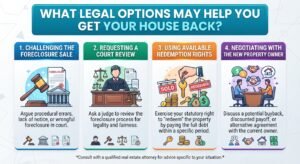
The possible legal options after a foreclosure sale depend on the facts of the case and the applicable law. Potential issues to investigate may include a statutory redemption right, an alleged procedural problem with the foreclosure, court remedies that may be available under state law, or a voluntary agreement involving the property.
Challenging the Foreclosure Sale
A homeowner may want to investigate the foreclosure if there is reason to believe that required procedures were not followed or that a significant legal error occurred.
Foreclosure laws commonly require specific notices and procedures. Federal mortgage-servicing rules also address certain types of errors involving foreclosure notices, judgments, and sales.
However, an alleged error does not automatically cancel a completed foreclosure sale. Whether a sale can be challenged depends on the specific facts, the applicable law, and the remedy available in that jurisdiction.
Requesting a Court Review
Whether a court can review a foreclosure sale depends on the type of foreclosure and the legal remedy being requested. Judicial foreclosures already involve court proceedings. A non-judicial foreclosure generally takes place without a foreclosure lawsuit, although a separate legal action may sometimes be available when permitted by law.
Using Available Redemption Rights
If the state provides a post-sale redemption right and the homeowner qualifies, exercising that right may provide a legal path to recover the property. The process usually requires compliance with specific statutory requirements. These requirements may include paying the required amount within a particular period and following prescribed procedures.
Negotiating With the New Property Owner
A former homeowner may also consider communicating with the new owner about the property. However, negotiation is different from exercising a legal redemption right. A new owner may have legal rights that prevent or limit an informal arrangement.
If a purchase, settlement, lease, or other agreement is proposed, the homeowner should carefully review the terms and consider obtaining independent legal advice before signing documents or making payments.
How Much Time Do You Have to Get Your House Back?
There is no single nationwide deadline for recovering a home after a foreclosure sale. If a state provides a post-sale redemption period, the length of that period and the requirements for exercising it are determined by applicable law. Some homeowners may have a specific redemption period, while others may not have a general statutory right to redeem after the sale.
Understanding Redemption Deadlines
A redemption deadline is the final date by which an eligible person must exercise a statutory redemption right. The deadline can vary according to state law, the type of foreclosure, the property involved, and other circumstances.
Homeowners should not rely on a general number of days found online. The correct deadline should be confirmed through the applicable statute, official foreclosure documents, court records, or qualified legal counsel.
Why Acting Quickly Matters
Waiting can reduce the options available to a homeowner. If a redemption period, appeal period, or other legal deadline applies, missing How to Get Your House Back After Foreclosure Sale may affect the ability to pursue that particular remedy. The best approach is to collect the relevant documents, identify the sale date, determine the property’s current legal status, and obtain professional advice as soon as possible.
What Happens When the Deadline Expires?
When a statutory deadline expires, the legal right associated with that deadline may no longer be available. The exact consequences depend on the applicable law. A homeowner should therefore avoid assuming that a redemption right remains available indefinitely. If you believe a deadline may be approaching, treat the matter as urgent and seek qualified legal assistance.
How to Determine Whether You Still Have Rights to Your Home
A foreclosure sale does not answer every legal question by itself. To understand your remaining rights, you need to examine the foreclosure procedure, sale status, property records, and applicable state law.
Review Your Foreclosure Documents
Gather all documents connected with the mortgage and foreclosure. These may include the mortgage or deed of trust, foreclosure notices, sale notices, court documents, payment records, correspondence from the mortgage servicer, and documents received after the sale. Organizing these records can help a lawyer or housing counselor understand what happened and identify possible deadlines.
Check Your State’s Foreclosure Laws
State law can determine how a foreclosure is conducted and what happens after a foreclosure sale. How to Get Your House Back After Foreclosure Sale can also determine whether a post-sale redemption right exists and what conditions must be satisfied to use it. Because foreclosure laws can differ substantially, homeowners should not assume that a rule from another state applies to their property.
Identify Important Legal Deadlines
Pay close attention to dates in foreclosure and property documents. Depending on the circumstances, important dates may relate to the foreclosure sale, confirmation of the sale, recording of the deed, redemption period, court proceedings, or eviction process. Writing down these dates and verifying them with an appropriate legal professional can help prevent missed deadlines.
Consult a Qualified Foreclosure Attorney
If your goal is to determine How to Get Your House Back After Foreclosure Sale, professional legal advice can be particularly important. An attorney can review the foreclosure documents, determine which state laws apply, and explain whether redemption, a legal challenge, or another remedy may be available. A HUD-approved housing counselor may also help homeowners understand their situation and available housing-related resources.
What Should You Do After a Foreclosure Sale?

After the sale, focus on establishing the facts before making major decisions. Determine whether the sale has been completed, who currently holds the property interest, whether a redemption period applies, and whether any important deadline is approaching.
Gather Important Property and Loan Documents
Keep all mortgage and foreclosure documents in one place. Important records may include the original loan documents, foreclosure notices, auction information, court filings, payment records, correspondence, and documents related to the foreclosure sale. Having complete records can make How to Get Your House Back After Foreclosure Sale easier to evaluate your legal position.
Confirm the Status of the Foreclosure Sale
Find out whether the foreclosure sale actually occurred and whether How to Get Your House Back After Foreclosure Sale has been completed under the applicable state procedure. You may also need to determine whether a deed has been issued or recorded and who currently holds the property’s legal interest. County land records and court records can be useful for confirming the status of the property.
Respond to Legal Notices
Do not ignore official notices related to the property. A notice concerning possession, eviction, court proceedings, or another legal matter may contain an important deadline.
The amount of time a former homeowner can remain in the property after foreclosure varies by state. Therefore, homeowners should review the applicable rules rather than assuming that a particular number of days applies everywhere.
Get Professional Legal Advice
If you are unsure whether you have any remaining rights, getting professional help can prevent costly mistakes. A qualified foreclosure attorney can address legal questions specific to your situation. HUD-approved housing counselors can also provide assistance to homeowners dealing with mortgage and foreclosure issues.
What Factors Affect Your Ability to Recover Your House?
Several factors can determine whether recovering a home after foreclosure is legally possible.
Type of Foreclosure
The two major foreclosure procedures are judicial and non-judicial foreclosure. Judicial foreclosure generally involves a court case. Non-judicial foreclosure generally uses a statutory process without filing a foreclosure lawsuit. The procedure used can affect notices, deadlines, court involvement, and post-sale rights.
State-Specific Redemption Rules
Redemption rights are not uniform throughout the United States. Some states provide a statutory right of redemption after foreclosure, while others do not provide a general post-sale redemption right. Even where redemption exists, the length of the redemption period and the amount required to redeem can vary.
Status of the Foreclosure Sale
The legal status of the sale can also matter. A homeowner should determine whether the auction has taken place, whether the sale requires confirmation, whether title has transferred, and whether the deed has been recorded. The legal consequences of each stage depend on the governing law.
Possible Errors in the Foreclosure Process
A potential procedural error may be relevant if required notices or legal procedures were not properly followed. Federal mortgage-servicing rules address certain covered errors related to foreclosure activity, but the existence of an alleged error does not automatically mean that a foreclosure sale will be reversed. A lawyer can review the specific facts and determine whether a legal challenge is available.
Read more: RobTheCoins Investing: Beginner’s Guide, Tips & Review (2026)
Common Mistakes to Avoid After Foreclosure
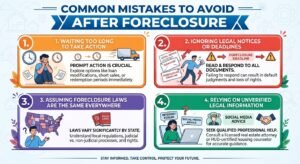
A homeowner facing foreclosure may be vulnerable to bad advice or fraudulent promises. Understanding common mistakes can help protect your remaining rights and finances.
Waiting Too Long to Take Action
Do not assume that you have plenty of time after a foreclosure sale. If a redemption period or another legal deadline applies, waiting may cause you to lose an available remedy. Start by determining the sale date and identifying the applicable deadlines.
Ignoring Legal Notices or Deadlines
Official notices should never be ignored. Court documents, foreclosure notices, and possession or eviction documents may require action within a specific period. If you do not understand a notice, seek help rather than setting How to Get Your House Back After Foreclosure Sale aside.
Assuming Foreclosure Laws Are the Same Everywhere
One of the most common mistakes is treating foreclosure law as if it were identical in every state. How to Get Your House Back After Foreclosure Sale is not State laws can differ regarding foreclosure procedures, redemption, possession, eviction, and other post-sale issues. Always verify the rules applicable to the property in question.
Relying on Unverified Legal Information
Be cautious about anyone who promises that they can definitely recover your home. Foreclosure-relief scams may involve upfront fees, promises of guaranteed results, requests to sign over property title, instructions to stop making mortgage payments, or demands that payments be sent to someone other than the mortgage servicer. A legitimate professional should not promise a guaranteed outcome in a situation controlled by state law and individual facts.
Final Thoughts
Understanding How to Get Your House Back After Foreclosure Sale begins with recognizing that foreclosure law is highly dependent on state law and the specific facts of the case. A homeowner may have a possible path through a statutory redemption right or another legal remedy, but there is no universal rule guaranteeing that a property can be recovered after foreclosure.
The availability of redemption, the deadline for using it, the amount required, and the effect of the foreclosure sale can all vary. If your home has already been sold through foreclosure, start by gathering your documents, confirming the status of the sale, identifying applicable deadlines, and seeking qualified legal or housing counseling assistance.
FAQs About How to Get Your House Back After Foreclosure Sale
Can you get your house back after a foreclosure sale?
Sometimes, depending on state law and the circumstances of the foreclosure sale.
Some states provide redemption rights that may allow an eligible homeowner to reclaim the property.
How long do you have to redeem a house after foreclosure?
There is no single nationwide redemption period because deadlines vary by state and foreclosure type. If redemption is available, check the applicable law and documents for the exact deadline.
Can you challenge a foreclosure sale after it happens?
A foreclosure sale may be challenged in certain circumstances when there is a legally recognized basis. The available remedies depend on state law and the specific facts of the foreclosure.
What happens if the foreclosure sale was conducted improperly?
The consequences depend on the nature of the error and the laws governing the foreclosure. A qualified attorney can review the process and explain whether any legal remedy may be available.
Should you hire an attorney after a foreclosure sale?
An attorney can help determine whether redemption, a legal challenge, or another remedy may be available. Professional advice is especially useful when important deadlines or court documents are involved.