Leather furniture can add warmth, comfort, and character to a home, but it needs the right kind of care to stay in good condition. Dust, everyday dirt, spills, body oils, sunlight, and heat can gradually affect the appearance of leather.
The good news is that routine leather care does not have to be complicated. In most cases, regular dusting, careful vacuuming, prompt spill cleanup, and appropriate cleaning products are enough to keep leather furniture looking well maintained.
If you want to know how to clean leather furniture properly, the most important thing to remember is that not all leather is cared for in exactly the same way. Always check the furniture’s care label or manufacturer’s instructions before using water, soap, conditioner, or another cleaning product.
Why Cleaning Leather Furniture Properly Matters
Leather is a durable upholstery material, but how to clean leather furniture properly is still vulnerable to improper cleaning. Using too much water, rubbing too aggressively, applying unsuitable household cleaners, or exposing leather to excessive heat can create problems that are more difficult to correct.
Regular maintenance is a better approach. Removing dust and debris frequently and dealing with spills quickly can help keep the furniture looking clean while reducing the need for aggressive cleaning later.
How Dirt and Dust Can Damage Leather
Dust and loose dirt naturally collect on furniture, particularly around seams, cushions, and other areas that are difficult to reach. If these particles are allowed to accumulate, the furniture can look dull and dirty.
Regular dusting and vacuuming help remove this surface debris. A soft cloth can be used on accessible areas, while a suitable vacuum attachment can help clean seams and crevices. The key is to clean gently. Leather does not need vigorous scrubbing during routine maintenance.
Benefits of Regular Leather Furniture Cleaning
Regular cleaning helps control everyday dust, dirt, and accidental spills before they become bigger problems. how to clean leather furniture properly can also make your furniture easier to maintain because you are dealing with small amounts of surface dirt rather than allowing buildup to continue.
A simple routine of dusting, vacuuming, and promptly blotting spills can go a long way toward maintaining the appearance of leather furniture. The goal is not to repeatedly wash the leather. Instead, consistent and gentle care is usually the better strategy.
What You Need to Clean Leather Furniture
You do not need a cabinet full of cleaning products to care for leather furniture. For ordinary maintenance, a soft lint-free cloth and a suitable vacuum attachment are often enough. For deeper cleaning, the products you choose should depend on the type of leather and the manufacturer’s recommendations.
Essential Cleaning Supplies
For basic leather furniture care, consider keeping these items available:
- A soft, lint-free cloth
- A vacuum cleaner with a suitable brush or crevice attachment
- Distilled water, if permitted by the furniture manufacturer
- A leather cleaner specifically recommended for your furniture
- A compatible leather conditioner, if recommended
Avoid assuming that a product labeled for leather is automatically suitable for every leather surface. Different finishes can have different care requirements.
Choosing the Right Leather Cleaner
Choosing the right cleaner is more important than choosing the strongest cleaner. Some furniture manufacturers recommend specific leather-care products, while others provide instructions for limited use of mild soap and water. Some manufacturers also warn against products such as abrasive cleaners, furniture polish, solvents, oils, saddle soap, detergent soaps, or ammonia-based cleaners.
Why a Patch Test Is Important
Before applying a new cleaning product to a visible area, test it on a small, hidden section of the furniture. A patch test gives you an opportunity to check whether the product changes the leather’s color, appearance, or surface before you treat the entire piece. This is especially important when you are using a product for the first time or when you are uncertain about the leather finish.
How to Clean Leather Furniture Properly
The safest way to clean leather furniture is to start gently and use as little moisture as the manufacturer’s instructions allow. A basic process involves removing loose dirt, checking the recommended cleaning method, testing the product, cleaning gently, and allowing the leather to dry naturally.
Step 1: Remove Dust and Loose Dirt
Begin by removing dust, crumbs, and other loose debris. Use a clean, soft cloth to dust the main surfaces. For seams and crevices, use a suitable vacuum attachment and work carefully.
Do not press the vacuum nozzle aggressively against the leather. The purpose of this step is simply to remove loose dirt before you introduce any moisture or cleaning product.
Step 2: Prepare Your Cleaning Solution
Do not automatically reach for a homemade cleaning mixture. Some manufacturers allow a mild soap-and-water solution for certain leather furniture, while others specifically advise against detergent soaps and household cleaning products.
If your manufacturer’s instructions permit a particular cleaning solution, prepare it exactly as directed. If the manufacturer recommends a dedicated leather cleaner, use that product according to its instructions.
Step 3: Test the Cleaner on a Hidden Area
Choose an inconspicuous area, such as a less visible section beneath or behind the furniture. Apply the cleaning method according to its instructions and observe the result. Look for unexpected color changes, marks, or other changes to the surface. If the leather reacts poorly, do not continue using the product on the rest of the furniture.
Step 4: Wipe the Leather Gently
Once the cleaning method has passed the patch test, work gently over the affected area. Avoid soaking the leather and do not scrub aggressively. For a spill, blotting is generally preferable to vigorous rubbing.
Work in manageable sections rather than covering the entire sofa with excessive moisture at once. If you are cleaning a stubborn stain and the recommended method does not work, repeating increasingly aggressive treatments can increase the risk of damage. Professional leather cleaning may be the better option.
Step 5: Dry the Furniture Properly
After cleaning, allow the leather to dry naturally. Do not use a hair dryer or place the furniture directly next to a heater to speed up the process. Excessive heat can contribute to drying and cracking. Avoid sitting on or heavily using the cleaned area until it has dried according to the product or manufacturer’s instructions.
How to Clean Different Leather Furniture
The cleaning method should be determined by the leather finish rather than simply by whether the furniture is a sofa or chair. A leather sofa and a leather chair may require similar basic care, but different leather finishes can react differently to water and cleaning products.
How to Clean a Leather Sofa
Start by vacuuming seams and removing loose dust from the sofa. For a minor spill, remove excess liquid promptly with a clean absorbent cloth. Do not rub the spill aggressively. If the manufacturer’s instructions permit a damp cloth or approved leather cleaner, use it sparingly and gently. After cleaning, allow the surface to dry naturally.
How to Clean a Leather Chair
Clean a leather chair using the same basic principles: remove loose dirt, address spills promptly, and use only a cleaning method appropriate for the leather. Pay attention to frequently touched areas such as the arms, seat, and headrest. These areas can accumulate dirt and body oils through everyday use. Regular light maintenance is preferable to waiting until the entire chair requires intensive cleaning.
How to Clean White Leather Furniture
White and light-colored leather can make dirt, stains, and color transfer easier to notice. Avoid using strong household cleaners simply because a stain is visible. Instead, follow the manufacturer’s recommended cleaning method and test any product in a hidden location first.
If the discoloration does not respond to the approved cleaning method, consider professional leather cleaning rather than repeatedly treating the area.
How to Clean Dark Leather Furniture
Dark leather may hide everyday dirt more effectively than light leather, but it still needs regular care. Dust the surface, clean seams and crevices, and deal with spills promptly. Use only products suitable for the leather. Do not assume that dark leather can tolerate stronger cleaning chemicals simply because stains are less visible.
How to Remove Common Stains From Leather Furniture
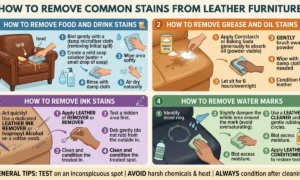
Stain removal requires extra caution because different substances can interact with leather in different ways. The safest first step for many fresh spills is to remove the excess quickly and gently rather than rubbing it deeper into the surface.
How to Remove Food and Drink Stains
When food or a drink spills on leather, act promptly. Use a clean absorbent cloth to blot away excess liquid. Avoid scrubbing because aggressive rubbing can spread the spill or affect the leather’s surface. For the remaining mark, follow the manufacturer’s approved cleaning method. If the stain remains after gentle cleaning, avoid repeatedly applying stronger products.
How to Remove Grease and Oil Stains
Grease and oil should be handled carefully because different leather finishes can respond differently to oily substances. Start by gently blotting excess oil with a clean, dry cloth. Do not immediately add water unless your manufacturer’s instructions specifically recommend it.
Some leather-care instructions recommend leaving certain small oil spots alone after removing the excess, while other manufacturers provide specific products or procedures. Follow the instructions for your particular leather rather than applying a universal DIY treatment.
How to Remove Ink Stains
Ink can be particularly difficult to remove from leather. Avoid experimenting with strong solvents or household chemicals unless the furniture manufacturer specifically recommends them for your leather. If the approved cleaning method does not remove the ink, professional leather cleaning is generally a safer option than repeated rubbing or chemical treatments.
How to Remove Water Marks
Water marks can sometimes be treated by carefully cleaning the affected area according to the manufacturer’s instructions. Some manufacturers recommend treating the area evenly, such as wiping from seam to seam, so the leather dries uniformly without creating another visible boundary.
However, this approach is not appropriate for every leather finish. If the leather is particularly absorbent or delicate, check its care instructions before applying additional moisture.
How to Condition Leather Furniture After Cleaning
Conditioning can be part of leather care, but it should not be treated as a mandatory step for every piece of leather furniture. Some manufacturers recommend leather conditioners, while the appropriate product and frequency can vary depending on the leather.
Why Leather Conditioner Is Important
A suitable leather conditioner can help maintain the feel and condition of certain leather surfaces. However, using an unsuitable conditioner can cause problems. Avoid choosing a conditioner simply because it is marketed as a universal leather product. Check the furniture manufacturer’s recommendations first.
How to Apply Leather Conditioner
Before applying conditioner, make sure the leather is clean and suitable for conditioning. Test the conditioner on a hidden section first. If the result is satisfactory, apply the recommended amount using a soft cloth and follow the product’s directions. Do not apply excessive amounts in an attempt to make the leather softer or shinier.
How Often Should You Condition Leather?
There is no universal conditioning schedule for every leather sofa. The appropriate frequency depends on the leather, the furniture manufacturer’s instructions, how heavily the furniture is used, and the conditioner itself. Instead of conditioning automatically every few weeks, follow the care instructions provided for your furniture.
Common Leather Cleaning Mistakes to Avoid
Many leather-cleaning problems come from using methods designed for other household surfaces. Understanding what to avoid is an important part of learning how to clean leather furniture properly.
Using Too Much Water
Leather should not be unnecessarily saturated. Excess moisture can be particularly problematic for leather finishes that readily absorb water. Use only the amount of moisture recommended by the manufacturer or cleaning product.
Using Harsh Cleaning Products
Do not assume that a powerful household cleaner will produce a better result. Some leather furniture manufacturers specifically advise against abrasive cleaners, solvents, furniture polish, oils, varnish, detergent soaps, ammonia water, saddle soap, and other unsuitable products. When it comes to leather, stronger does not automatically mean better.
Scrubbing Leather Too Hard
Leather generally benefits from gentle cleaning rather than aggressive scrubbing. If a stain does not disappear with the recommended method, stop and reassess the situation. Continued rubbing can create a larger problem than the original stain.
Drying Leather With Direct Heat
Avoid hair dryers, heaters, radiators, and other intense heat sources when drying recently cleaned leather. Natural air drying is generally the safer approach. Leather furniture should also be positioned away from excessive heat during everyday use.
Skipping the Patch Test
Skipping the patch test saves only a few minutes but can create an unnecessary risk. Always test a new cleaner or conditioner in a hidden area before using it on a prominent section of the furniture.
How to Keep Leather Furniture Clean and Protected
The easiest leather furniture to clean is furniture that receives regular basic care. Instead of waiting for visible dirt and stains to accumulate, establish a simple maintenance routine.
Dust and Vacuum Regularly
Dust the surface regularly with a soft cloth and use a suitable vacuum attachment to clean seams and crevices. This removes loose debris before it becomes embedded around cushions and other areas.
Clean Spills Immediately
Do not allow spills to sit on the leather unnecessarily. Blot excess liquid with a clean absorbent cloth as soon as possible. Avoid rubbing because rubbing can spread the spill. Then follow the appropriate cleaning instructions for your leather.
Keep Leather Away From Direct Sunlight
Prolonged direct sunlight can cause materials, including leather, to fade. Where possible, position leather furniture away from strong direct sunlight. Window coverings can also help reduce prolonged exposure.
Follow a Regular Cleaning Routine
A simple routine can include:
- Dusting the furniture regularly.
- Vacuuming seams and crevices.
- Cleaning spills as soon as they happen.
- Using only appropriate leather-care products.
- Testing new products in an inconspicuous area.
- Conditioning only when appropriate for the leather.
- Keeping the furniture away from excessive sunlight and heat.
This type of preventive care is usually more sensible than frequent aggressive deep cleaning.
Read more : Is Quikconsole com Worth Using? Honest Review
When to Hire a Professional Leather Cleaner
Some leather problems are better left to professionals. Professional help may be appropriate when the stain is stubborn, the leather is delicate, the finish is unknown, or previous cleaning has already changed the appearance of the furniture.
Signs Your Leather Needs Professional Cleaning
Consider professional cleaning if:
- A stain remains after the manufacturer’s recommended method.
- The leather has significant discoloration.
- The surface has substantial cracking or damage.
- You cannot identify the leather finish.
- The furniture is particularly valuable or delicate.
- Previous cleaning attempts have caused discoloration or other changes.
When DIY Cleaning Is Not Recommended
DIY treatment is not a good choice when you are unsure about the leather or when the manufacturer recommends professional care. It is especially wise to stop experimenting when a stain does not respond to the approved cleaning method. Repeated applications of different products can make the original problem harder to repair.
How Professional Cleaning Can Protect Your Furniture
A professional leather specialist can assess the condition and finish of the leather before choosing an appropriate treatment. This can be particularly useful for stubborn stains, significant discoloration, damaged surfaces, or delicate leather. Professional cleaning is not necessary for every routine spill, but it can be a safer alternative when ordinary care methods are no longer enough.
Final Thoughts on How to Clean Leather Furniture Properly
Learning how to clean leather furniture properly does not require complicated cleaning tricks. The most reliable approach is gentle, consistent care combined with products and methods that are appropriate for your particular leather. Start by removing dust and loose dirt regularly. Deal with spills promptly, avoid aggressive rubbing, and never assume that a household cleaner is safe simply because it works on another surface.
Most importantly, remember that leather furniture is not all the same. Always check the manufacturer’s instructions before trying a new cleaner, conditioner, or stain-removal method. With the right routine, careful cleaning, and a little patience, you can help your leather furniture stay clean, comfortable, and attractive for many years.
FAQs About Cleaning Leather Furniture
Can You Clean Leather Furniture With Soap and Water?
It depends on the leather and the manufacturer’s instructions. Some furniture manufacturers provide instructions for using a mild soap-and-water solution on certain leather furniture, while others advise against detergent soaps and household cleaners.
What Is the Best Way to Clean a Leather Sofa?
Start with regular dusting and vacuuming. For spills, blot excess liquid promptly rather than rubbing it.
How Often Should Leather Furniture Be Cleaned?
Routine dusting and vacuuming should be performed regularly, while deeper cleaning depends on how the furniture is used and what the manufacturer recommends.
Can You Use Vinegar to Clean Leather Furniture?
Vinegar should not be considered a universal leather cleaner. Because leather finishes differ and manufacturers provide different care instructions, using vinegar without checking the furniture’s recommendations could create unnecessary risk.
How Do You Clean Leather Without Damaging It?
Start by identifying the leather and reading the care instructions. Remove loose dust gently, blot spills promptly, use an appropriate cleaner sparingly, and test unfamiliar products in a hidden area.