Bifold barn door hardware is just as important as selecting the door itself. A well-designed hardware system ensures smooth operation, improves durability, and enhances the overall appearance of your living space. Whether you’re renovating a home, upgrading a closet, or installing a stylish room divider, the right hardware can make a noticeable difference in both function and design.
Unlike traditional swinging doors, bifold barn doors fold neatly as they slide along a track, making them an excellent choice for areas where space is limited. This innovative design combines the rustic charm of barn doors with the practicality of folding doors, creating a solution that works well in modern, farmhouse, industrial, and contemporary interiors.
What Is Bifold Barn Door Hardware?
It is a specialized track and roller system designed to support doors that fold into panels while sliding along a mounted track. Instead of moving as one large panel like a traditional barn door, bifold doors consist of two or more hinged sections that fold together during operation.
This unique mechanism allows the doors to occupy less space when opened, making them an ideal solution for compact rooms and narrow hallways. The hardware system includes several components that work together to ensure smooth, stable, and quiet movement.
How Does It Work?
A bifold barn door system operates by combining two simple movements:
- The door panels fold inward at their hinges.
- The folded panels slide smoothly along a mounted track.
Because the doors do not swing outward into the room, they maximize usable floor space while providing easy access to the opening.
Benefits of Bifold Barn Door Hardware
Installing quality offers more than just an attractive appearance. It also provides practical advantages that improve everyday convenience and long-term performance.
Saves Valuable Space
One of the biggest advantages is its space-saving design. Since the door folds instead of swinging open, it requires significantly less clearance, making it ideal for:
- Small bedrooms
- Walk-in closets
- Laundry rooms
- Pantries
- Home offices
- Apartments
Modern and Stylish Appearance
Bifold barn doors create a clean and sophisticated look that complements a wide range of interior styles. Hardware finishes such as matte black, brushed nickel, stainless steel, and oil-rubbed bronze allow homeowners to match existing décor effortlessly.
Smooth Door Operation
High-quality rollers and precision-engineered tracks reduce friction, allowing the doors to glide quietly and consistently. Many premium systems also include soft-close mechanisms that prevent slamming and reduce wear over time.
Better Accessibility
Compared to traditional swinging doors, bifold systems provide wider access to closets, storage areas, and utility spaces. This makes organizing and retrieving items much easier, especially in narrow rooms.
Long-Term Durability
Most premium hardware systems are manufactured from heavy-duty steel, stainless steel, or powder-coated metal. These materials resist bending, corrosion, and daily wear, ensuring reliable performance for years with minimal maintenance.
Components of Bifold Barn Door Hardware
Understanding the individual parts of a hardware system helps you choose the right product and simplifies installation.
Track System: The track serves as the main guide for the door’s movement. It is securely mounted above the doorway and supports the weight of the door panels while ensuring smooth sliding.
Rollers and Hangers: Rollers attach directly to the door and travel along the track. High-quality nylon or ball-bearing rollers provide quieter operation, reduce friction, and extend the lifespan of the hardware.
Hinges: Hinges connect the individual door panels, allowing them to fold inward as the door opens. Durable hinges help maintain proper alignment and ensure consistent movement over time.
Floor Guide: A floor guide prevents the lower portion of the door from swinging excessively during operation. It keeps the panels aligned and enhances overall stability.
Mounting Brackets: These brackets securely fasten the track to the wall or header, distributing the door’s weight evenly and ensuring safe installation.
Door Stops: Door stops limit the travel distance of the doors, preventing accidental impacts with walls or surrounding trim and protecting both the hardware and the door panels.
Types of Bifold Barn Door Hardware
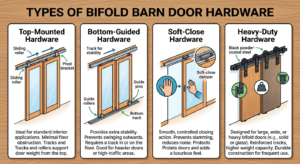
Not all its systems are the same. Choosing the right type depends on your door size, available space, and daily usage. Understanding the most common options will help you select a system that offers reliable performance and long-term value.
Top-Mounted Hardware
Top-mounted systems support the door from an overhead track, allowing the panels to glide smoothly while minimizing floor obstructions. This is the most popular option for residential interiors because it creates a clean, modern appearance.
Bottom-Guided Hardware
These systems include a floor guide that helps keep the doors aligned during movement. Bottom-guided hardware is ideal for larger or heavier doors that require additional stability.
Soft-Close Hardware
Soft-close systems use built-in dampers to slow the door before it reaches the end of the track. This feature reduces noise, prevents slamming, and protects the hardware from unnecessary wear.
Heavy-Duty Hardware
Designed for solid wood or oversized doors, heavy-duty hardware features reinforced tracks, stronger rollers, and higher weight capacities. It is commonly used in commercial spaces and high-traffic residential areas.
Single and Double Bifold Systems
- Single bifold systems are suitable for smaller openings, such as closets and pantries.
- Double bifold systems use two folding doors, making them ideal for wide openings, room dividers, and large storage spaces.
How to Choose the Right Bifold Barn Door Hardware
Selecting the best requires more than choosing a style. Consider these important factors before buying.
Door Weight Capacity: Always choose hardware rated to support your door’s weight. Overloading the system can lead to poor performance and premature wear.
Door Thickness: Verify that the hardware is compatible with your door’s thickness. Most systems are designed for standard interior door sizes.
Track Length: The track should match the width of your doorway and allow enough room for the doors to fold and slide smoothly.
Material Quality: Look for hardware made from durable materials such as powder-coated steel or stainless steel. These materials resist corrosion and provide long-lasting performance.
Finish and Design: Choose a finish that complements your home’s interior. Popular options include matte black, brushed nickel, stainless steel, and oil-rubbed bronze.
Ease of Installation: Many hardware kits include pre-drilled components and detailed instructions, making installation easier for DIY homeowners.
Installation Guide for Bifold Barn Door Hardware
Installing it may look complex at first, but with proper planning and accurate measurements, it becomes a manageable DIY project. A careful installation ensures smooth door movement, long-term durability, and safe operation.
- Tools You Will Need: Before starting, gather essential tools such as a drill, level, measuring tape, stud finder, screwdriver, pencil, and appropriate wall anchors. Having everything ready prevents interruptions during installation.
- Measure the Opening: Accurate measurement is critical. Measure the width and height of your doorway and confirm the clearance needed for folding panels. Even small errors can affect how the bifold barn door hardware performs.
- Mark and Install the Track: Use a level to mark the position of the track above the doorway. The track must be perfectly straight to ensure smooth sliding. Secure it firmly into wall studs or a solid header using mounting brackets.
- Attach Hinges and Rollers: Connect hinges between door panels, then attach rollers to the top of each door. These components are essential parts of bifold barn door hardware, ensuring controlled movement along the track.
- Hang the Doors: Carefully lift the doors and place the rollers onto the track. This step may require assistance due to the weight of the panels. Ensure each door glides smoothly before proceeding.
- Install Floor Guide: Position the floor guide at the bottom of the doorway. It prevents swinging and keeps the door aligned during operation. Proper alignment is key to stable performance.
- Test and Adjust: Slide the doors several times to check movement. Adjust hinges, rollers, or track alignment if needed. Smooth operation indicates that the bifold barn door hardware is installed correctly.
Common Installation Mistakes to Avoid
- Incorrect Measurements: Even a small measuring error can cause misalignment or poor folding movement.
- Weak Wall Support: Installing the track without studs or proper anchors can lead to instability and damage over time.
- Ignoring Door Weight Limits: Using hardware that cannot support the door’s weight reduces performance and may cause failure.
- Poor Alignment: If the track is not level, the doors may slide unevenly or stick during use.
Best Uses for Bifold Barn Door Hardware
The versatility makes it suitable for many areas in modern homes. Its space-saving folding design works especially well where traditional swinging doors feel bulky or restrictive.
Closets and Wardrobes: Closets are one of the most common applications. The folding mechanism allows full access to clothing and storage without requiring extra swing space.
Laundry Rooms: In tight laundry areas, bifold barn door hardware helps maximize movement space while still keeping appliances neatly concealed.
Pantries and Kitchens: It provides quick access to storage while maintaining a clean, organized kitchen appearance.
Bathrooms: Ideal for compact bathrooms where space efficiency is essential.
Home Offices: Helps create flexible workspaces that can be opened or closed as needed.
Buying Checklist Before Final Purchase
Before choosing bifold barn door hardware, make sure you evaluate the following:
- Measure Door Opening Accurately: Incorrect sizing is the most common buying mistake.
- Check Weight Capacity: Ensure the hardware can safely support your door material.
- Confirm Track Length: The track should allow smooth folding and sliding without obstruction.
- Inspect Material Quality: Steel or stainless steel is preferred for durability.
- Verify Included Components: Some kits include hinges, rollers, and guides, while others require separate purchases.
- Review Warranty and Support: A reliable warranty indicates better product quality and manufacturer confidence.
Final Verdict
Bifold barn door hardware can completely transform the functionality and style of your space. From closets to kitchens, its space-saving folding design offers both practicality and modern appeal. By selecting durable materials, ensuring correct installation, and performing regular maintenance, you can enjoy smooth, reliable performance for years.
Whether you are upgrading your home or planning a new interior project, investing in high-quality hardware ensures that your doors not only look great but also function effortlessly every day.
FAQs
Q1: What is bifold barn door hardware?
Ans: It is a specialized system that allows barn doors to fold and slide along a track, saving space while maintaining smooth operation.
Q2: Is it suitable for small rooms?
Ans: Yes, it is ideal for small rooms because it reduces the space needed for door movement.
Q3: Can I install bifold barn door hardware myself?
Ans: Yes, most kits are DIY-friendly, but accurate measurements and proper wall support are essential.
Q4: How long does it last?
Ans: High-quality systems can last many years with proper maintenance and occasional adjustments.
Q5: Does it support heavy wooden doors?
Ans: Yes, heavy-duty versions are specifically designed for solid wood and larger doors.
Q6: Do I need a floor guide?
Ans: Yes, a floor guide keeps the doors aligned and prevents swinging during movement.
Q7: What is the best material for durability?
Ans: Stainless steel and powder-coated steel are the most durable options.
Q8: How do I maintain bifold barn door hardware?
Ans: Clean the track regularly, tighten loose screws, and lubricate rollers when needed.