Smart home technology is changing how people manage their homes, from controlling lights with a phone to monitoring security cameras remotely. Connected appliances, intelligent lighting, smart locks, and automated climate systems are making everyday household tasks easier to manage.
The latest smart home devices news in 2026 highlights three important developments: more advanced home security products, increasingly connected household appliances, and smarter software that helps people manage multiple devices. Manufacturers are focusing not only on new hardware but also on improving the way connected products communicate and respond to users.
Recent examples include Ring’s announcement of a rechargeable smart lock and new security cameras, Samsung’s expanded AI-powered appliance lineup, and a SmartThings platform update announced on October 12, 2026.
Latest Smart Home Device Product Launches in 2026
The smart home market continues to expand across security, lighting, climate control, and household appliances. However, a product announcement does not necessarily mean that the device is immediately available in every country.
Recent announcements provide several examples of how manufacturers are approaching connected living. Ring is expanding its security hardware, Samsung is developing AI-supported appliances and connected home controls, and Philips Hue is introducing additional lighting features and entertainment integrations.
Newly Announced Smart Speakers and Voice Assistants
Smart speakers and voice assistants allow users to control compatible devices through spoken commands. Depending on the platform, they can adjust lighting, operate supported appliances, play audio, answer questions, and activate predefined routines.
An important development is the movement toward more natural interactions. Instead of remembering exact commands, users increasingly expect assistants to understand conversational requests and help them manage connected devices.
Latest Smart Security Cameras and Video Doorbells
Smart security cameras and video doorbells help homeowners monitor entrances, receive motion alerts, and check selected areas remotely. Depending on the model, features may include high-resolution video, night vision, two-way audio, motion tracking, and cloud or local recording.
In October 2026, Ring announced an expanded camera lineup that includes four 4K cameras and a Pan-Tilt Indoor Cam 2K. The company also announced its first smart lock, which features a manually operated power dial designed to provide temporary power when its rechargeable battery is depleted.
New Smart Lighting and Climate Control Devices
Smart lighting and climate-control systems allow users to adjust brightness, schedules, and supported temperature settings through apps or automation platforms. Some systems can also respond to sensors or predefined conditions.
Philips Hue, the connected lighting brand operated by Signify, announced additional lighting products and software features in September 2026. Smart home devices news announcements included new entertainment lighting options, design-focused products, and AI-assisted lighting behaviors for supported users and equipment.
Samsung’s 2026 appliance lineup in India also includes AI-enabled air-conditioning products intended to support comfort and connected home management.
Innovative Smart Home Appliances
Smart appliances bring connected controls into kitchens, laundry rooms, and other parts of the home. Examples include refrigerators, washing machines, air conditioners, ovens, and dishwashers.
Depending on the model, connected functions may allow users to monitor appliance status, receive maintenance notifications, adjust selected settings, or manage routines through a compatible application.
Top Innovations Transforming Smart Home Technology
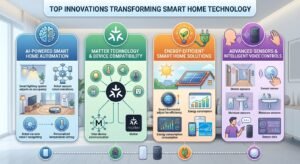
The most significant smart home innovations are not limited to new gadgets. They also involve improvements in automation, connectivity, and the software that allows different products to work together.
Artificial intelligence can make certain interactions more natural, while interoperability standards can reduce some of the difficulties associated with using products from different manufacturers. These technologies have the potential to make connected homes easier to manage, although practical results vary between systems.
AI-Powered Smart Home Automation
Artificial intelligence is becoming an important part of connected home technology. Depending on the implementation, AI can help interpret requests, summarize information, personalize supported experiences, or simplify the creation of automation routines.
For example, a user may want lights to turn on at a particular time or compatible appliances to follow a preferred schedule. A well-designed system can make these tasks easier to configure and manage.
Matter Technology and Device Compatibility
Matter is a smart home connectivity standard developed by the Connectivity Standards Alliance. Smart home devices news aims to improve communication between compatible devices and supported platforms, making it easier for consumers to build a connected home with products from participating manufacturers.
The Matter 1.6 specification was released in June 2026. Its improvements include NFC-based device commissioning, additional tools for coordination between authorized controllers, and more context-aware thermostat control.
Energy-Efficient Smart Home Solutions
Smart energy-management products can help households monitor electricity use and control selected devices more efficiently. Examples include connected thermostats, lighting systems, smart plugs, and energy monitors.
Some systems provide information about consumption patterns, while others support scheduling and automation. This information can help users identify unnecessary usage and make more informed decisions about household energy consumption.
The Matter 1.3 specification, released in 2024, introduced energy-reporting capabilities and support for additional energy-related use cases. Subsequent updates have continued to develop the standard.
Advanced Sensors and Intelligent Voice Controls
Sensors allow smart home systems to respond to information about their surroundings. Depending on the product, they can detect motion, temperature, humidity, light levels, door openings, or water leaks.
A compatible motion sensor may activate a hallway light, while a temperature sensor can help a supported climate-control system respond to changing conditions. Voice controls provide another way to manage compatible equipment without navigating several apps.
These features can improve convenience, but reliability depends on correct placement, battery condition, network performance, and the capabilities of the connected platform.
Major Smart Home Device Trends to Watch
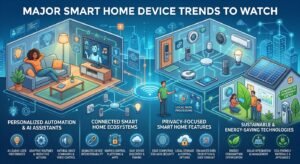
Smart home devices news increasingly covers the relationship between AI, connected ecosystems, privacy, and energy management. Consumers are becoming interested not only in what a device can do but also in how reliably it works and how much information it collects.
Several trends are worth watching because they affect the long-term usefulness of connected products.
Personalized Automation and AI Assistants
Personalized automation allows users to create routines that match their preferences. A household might schedule lighting, adjust compatible climate controls, or create different settings for work, relaxation, and bedtime.
AI assistants may make these routines easier to create by interpreting natural-language requests. However, personalization can involve information about household schedules, preferences, and device activity.
Connected Smart Home Ecosystems
A connected smart home ecosystem brings compatible products together through an app, controller, or shared platform. Smart home devices news can allow users to manage lighting, security, appliances, and climate controls without operating each product independently.
Samsung’s SmartThings platform is one example of this approach. On October 12, 2026, Samsung announced an update introducing SmartThings Now, a redesigned Home tab experience, and expanded local-control capabilities.
Samsung stated that local control is intended to keep connected devices responsive during network disruptions. The exact behavior still depends on the devices, supported functions, and configuration.
Privacy-Focused Smart Home Features
Smart home devices may collect different kinds of information, including video, audio, usage data, and device status. Privacy-focused features can give users greater control over when information is collected and how Smart home devices news is stored.
Examples include physical camera shutters, microphone controls, adjustable permissions, and clear options for deleting recordings.
Ring’s newly announced indoor camera includes a physical privacy shutter designed to disable the camera and microphone when closed. Features like this can help users manage privacy, although consumers should verify how the controls operate on the exact model they purchase.
Sustainable and Energy-Saving Technologies
Smart home technology can support more thoughtful energy management by helping households monitor consumption and control compatible devices.
Connected thermostats, efficient lighting, and energy-monitoring tools may help users identify waste and adjust their routines. However, sustainability also involves product lifespan, repair options, software support, and responsible disposal.
Consumers should not assume that a connected appliance is automatically more environmentally friendly than a conventional model. Compare published efficiency information and consider whether the device offers measurable benefits.
Best Smart Home Devices for Different Needs
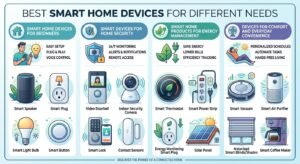
The best smart home devices depend on a household’s needs, budget, network, and existing equipment. A beginner may benefit from a simple lighting setup, while another household may prioritize security cameras or energy monitoring.
Smart Home Devices for Beginners
Smart bulbs, compatible smart plugs, basic sensors, and entry-level smart speakers can provide a straightforward introduction to home automation.
A smart bulb can offer scheduled lighting and brightness adjustments. A compatible smart plug can remotely control certain electrical appliances, provided the appliance and plug are suitable for that use.
Smart Devices for Home Security
Smart security products include cameras, video doorbells, smart locks, contact sensors, and compatible alarm systems.
A camera may help monitor an entrance, while a video doorbell can allow users to check visitors remotely. Smart locks may offer app-based access or keypad entry, depending on the model.
Buyers should compare alert reliability, account security, backup access methods, storage options, and ongoing subscription costs.
Smart Home Products for Energy Management
Smart thermostats, connected lighting, energy monitors, and suitable smart plugs can help households manage selected electrical devices and understand consumption patterns.
Scheduling lights and climate controls around actual usage may reduce unnecessary energy consumption. Energy monitors can also provide useful information about how much electricity certain equipment uses.
Devices for Comfort and Everyday Convenience
Smart lighting, connected speakers, compatible climate sensors, automated blinds, and smart displays can make everyday routines easier.
Benefits of the Latest Smart Home Innovations
Smart home technology can provide greater convenience, remote monitoring, and additional information about household activity. Its value depends on the product and the way Smart home devices news is used.
Improved Home Security and Safety
Connected cameras, doorbells, sensors, and smart locks can help users monitor selected areas, receive alerts, and manage access remotely.
A camera may notify a homeowner when movement is detected, while a contact sensor can report when a compatible door or window opens.
Greater Convenience Through Automation
Automation allows compatible devices to perform routine tasks based on schedules, sensor readings, or user commands.
For example, a household can create a lighting schedule or configure compatible devices to follow an evening routine. These functions reduce the need for repeated manual adjustments.
Energy Management and Potential Cost Savings
Connected energy tools can help households understand consumption and manage selected equipment more efficiently.
Scheduling climate controls, switching off unnecessary lighting, and monitoring high-use appliances may help reduce waste. However, savings are not guaranteed and depend on equipment efficiency, local electricity prices, and household behavior.
Accessibility and Personalized Living Experiences
Smart home devices can provide alternative ways to operate household equipment. Voice commands, remote controls, scheduled lighting, and compatible automation may help people who find conventional switches or controls difficult to use.
Accessibility features differ between products, so consumers should check language support, control options, compatibility with assistive technology, and reliability.
How to Choose the Right Smart Home Devices
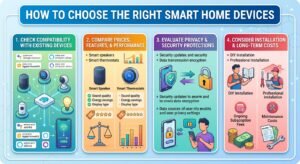
Choosing a smart home device requires more than comparing advertised features. Buyers should evaluate compatibility, total ownership costs, privacy, installation, and the manufacturer’s software-support arrangements.
Check Compatibility With Existing Devices
Identify the phone, router, hub, speaker, and smart home platform you already use. Then confirm whether the new product supports that setup and whether Smart home devices news important features work with your preferred system.
Matter compatibility can help products communicate across supported ecosystems, but individual features may still depend on the manufacturer or controller.
Compare Prices, Features, and Performance
Compare products according to their intended use rather than choosing the model with the longest feature list.
For cameras, consider image quality, night performance, storage, alert accuracy, and privacy controls. For appliances, examine energy efficiency, reliability, repair options, and warranty coverage.
Remember to include subscriptions, installation, batteries, and other ongoing expenses when comparing prices.
Evaluate Privacy and Security Protections
Connected devices can create risks if their accounts, networks, or software are not adequately protected.
Look for clear privacy policies, appropriate authentication options, regular security updates, and controls for microphones, cameras, and stored data.
Use unique passwords, secure your home network, and enable multifactor authentication where available. Review permissions and check whether the manufacturer provides an expected support period.
Consider Installation and Long-Term Costs
Some devices require only an app and a wireless connection, while others may need special wiring, mounting, a hub, or professional installation.
Check the manufacturer’s instructions and ensure that the device is appropriate for your home’s electrical system. Electrical work should be handled by a qualified professional when necessary.
Long-term costs may include subscriptions, batteries, maintenance, repairs, and replacement equipment. Consider warranty terms and what happens if the manufacturer ends software support.
Smart Home Device Security and Privacy
Smart home devices connect household equipment to accounts, apps, and sometimes remote services. These connections can provide useful features, but they also make security and privacy important considerations.
Responsible setup and ongoing maintenance help users manage connected devices more safely.
Protecting Smart Devices From Cyber Threats
Secure your home router with a strong administrator password and suitable wireless encryption. Change default device credentials, use unique passwords, and enable multifactor authentication when supported.
Keep device software and companion apps updated. Review connected accounts and remove access for people who no longer need Smart home devices news.
Understanding Data Collection and Permissions
Different products collect different types of information. Cameras may capture video, voice assistants may process spoken requests, and appliances may record operating information.
Before enabling a feature, review what data is collected, where Smart home devices news is processed, how long it is retained, and whether it can be deleted.
Why Firmware and Security Updates Matter
Firmware is the software that controls a device’s basic functions. Manufacturers may release updates to address vulnerabilities, improve reliability, or introduce additional features.
Enable automatic updates when appropriate, or check the manufacturer’s application and support information regularly. Keep companion apps updated as well.
Before buying, investigate whether the manufacturer provides ongoing security support. Devices that no longer receive updates may become less suitable for sensitive uses, especially when they handle video or access control.
Read more: Is Quikconsole com Worth Using? Honest Review
The Future of Smart Home Devices and Innovation
The future of smart home technology will depend on how well manufacturers combine convenience, interoperability, security, and reliability.
Current developments provide useful clues about the industry’s direction, but future features should not be treated as confirmed until manufacturers announce them and provide supporting specifications.
The Growing Role of Artificial Intelligence
AI is becoming more prominent in voice assistants, connected appliances, and home-management software.
Recent product announcements from Amazon and Samsung illustrate how companies are expanding AI-assisted experiences across voice interaction and household appliances.
Smarter Energy Management and Sustainability
Smart home platforms may continue improving the way compatible devices report energy information and coordinate selected functions.
Standards such as Matter provide a foundation for supported products to exchange information across compatible systems. However, individual capabilities depend on device certification and manufacturer implementation.
Consumers should look for useful energy data, efficient hardware, long-term software support, and repair options rather than assuming that every connected product is automatically sustainable.
What Consumers Can Expect From Future Product Launches
Upcoming smart home launches are likely to continue exploring AI assistance, connected security, easier device setup, and more integrated control systems. The exact products, prices, and release dates will depend on individual manufacturers and markets.
Before buying a new product, ask three questions: Does it solve a genuine problem? Does it work with your existing equipment? And are the long-term costs reasonable?
Final Thoughts
Smart home technology continues to develop through improvements in AI assistance, connected security, lighting, appliances, and device compatibility. Recent announcements from Ring, Samsung, Amazon, Philips Hue, and the Connectivity Standards Alliance illustrate how innovation involves both new products and the systems that connect them.
Following smart home devices news can help consumers understand new features and make informed purchasing decisions. However, the newest device is not necessarily the best choice for every household. Compatibility, privacy, reliability, installation, and long-term cost deserve as much attention as advertised specifications.
FAQs About Smart Home Devices News
What Are the Latest Trends in Smart Home Devices?
The latest trends include AI-powered assistants, connected security systems, Matter compatibility, and energy-efficient smart home technology.
Which Smart Home Devices Are Most Useful for Beginners?
Smart bulbs, smart plugs, basic sensors, and entry-level smart speakers are useful starting points for beginners.
How Is Artificial Intelligence Changing Smart Home Technology?
Artificial intelligence is helping smart home devices understand voice commands, personalize supported features, and simplify automation routines.
Are Smart Home Devices Worth Buying in 2026?
Smart home devices can be worthwhile when they solve practical problems, such as improving home security or managing energy use.
How Can I Keep My Smart Home Devices Secure?
Use strong, unique passwords, secure your Wi-Fi network, enable multifactor authentication, and install software updates regularly.