A balanced diet is not about following strict food rules or giving up everything you enjoy. It is about choosing a variety of foods that provide the nutrients your body needs while fitting your lifestyle, budget, and personal preferences. With the right approach, healthy eating can become a natural part of everyday life rather than a difficult challenge.
This guide to nutrition advice theweeklyhealthiness explains how to understand essential nutrients, build balanced meals, plan affordable food choices, and develop sustainable eating habits. Whether you prepare meals at home, work long hours, or manage a busy family schedule, small changes can help you improve the quality of your diet.
Healthy eating looks different for different people. Age, activity level, medical conditions, cultural traditions, and food availability all influence nutritional needs. The goal is to establish a practical eating pattern based on variety, balance, moderation, and adequate nutrition.
What Is Nutrition Advice TheWeeklyHealthiness?
Nutrition advice theweeklyhealthiness focuses on understanding healthy food choices and applying reliable nutrition principles to everyday meals. It encourages readers to look beyond popular diet trends and learn how different foods contribute to a balanced eating pattern.
Useful nutrition guidance should explain the role of essential nutrients, help readers compare food choices, and provide realistic suggestions for meal planning. It should also distinguish established nutritional recommendations from personal opinions and unverified health claims.
Understanding the Basics of Healthy Nutrition
Healthy nutrition means consuming a suitable variety of foods that provide energy and essential nutrients. These include carbohydrates, protein, fats, vitamins, minerals, and water. Fiber is also important for normal digestive function and is found in foods such as vegetables, fruits, beans, and whole grains.
Why Balanced Eating Matters for Everyday Wellness
Food supplies the energy and nutrients needed for daily activities, normal growth, and tissue maintenance. A varied eating pattern also helps the body obtain nutrients that may be missing when meals rely on only a few types of food.
Key Principles of a Healthy Diet
Four useful principles can guide everyday food choices:
- Adequacy: Obtain enough essential nutrients to meet your body’s needs.
- Balance: Combine different food groups in appropriate proportions.
- Moderation: Limit excessive salt, free sugars, and unhealthy fats.
- Diversity: Eat a variety of nutritious foods instead of depending on a narrow selection.
These principles provide a practical foundation for making informed decisions without following unnecessary restrictions.
Why Is a Balanced Diet Important for Overall Health?
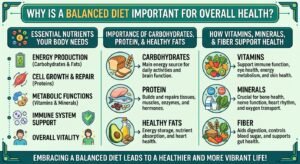
A balanced diet helps supply the nutrients required for normal bodily functions. Nutrition advice theweeklyhealthiness can also improve overall dietary quality by encouraging nutritious foods and reducing excessive consumption of products high in salt, added sugar, or unhealthy fats.
Healthy eating does not require every meal to be perfect. The overall pattern of your food choices matters more than one individual meal.
Essential Nutrients Your Body Needs
The body needs carbohydrates, protein, fats, vitamins, minerals, and water to function properly. Carbohydrates and fats provide energy, protein supports tissue growth and maintenance, and vitamins and minerals contribute to processes such as normal immune function and bone health.
Fiber supports normal bowel function and can help make meals more satisfying. Drinking enough water is important for hydration, temperature regulation, and other bodily functions.
The Importance of Carbohydrates, Protein, and Healthy Fats
Carbohydrates are an important source of energy. Nutritious sources include oats, whole grains, rice, potatoes, beans, and fruits. Choosing fiber-rich carbohydrate sources more often can improve the overall quality of your diet.
Protein helps build and maintain body tissues. Eggs, fish, poultry, lentils, chickpeas, beans, dairy products, tofu, nuts, and seeds can contribute protein to meals.
Fat is also essential. Unsaturated fats found in many nuts, seeds, fish, and plant oils are generally preferable to large amounts of saturated fat and industrial trans fat. The aim is not to eliminate carbohydrates or fats, but to choose suitable sources and amounts.
How Vitamins, Minerals, and Fiber Support Health
Vitamins and minerals perform different functions throughout the body. Calcium supports bones and teeth, iron is needed to produce hemoglobin, and vitamin A contributes to normal vision and immune function.
Fiber, found in plant foods such as vegetables, fruits, lentils, beans, and whole grains, supports digestive health. Eating different types of produce and rotating your food choices can help improve dietary variety.
Supplements are not automatically necessary for everyone. If you suspect a deficiency or have a medical condition affecting nutrient absorption, seek advice from a qualified healthcare professional.
How to Build a Balanced Diet Step by Step
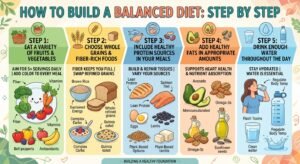
Building a balanced diet becomes easier when you make gradual changes to meals you already enjoy. Instead of changing everything at once, start by adding vegetables, choosing fiber-rich foods more often, or including a suitable protein source with meals.
A useful visual guide is to fill approximately half your plate with vegetables and fruits, one-quarter with whole grains, and one-quarter with healthy protein sources. This is a general meal-planning guide, not a strict prescription for individual calorie needs.
Eat a Variety of Fruits and Vegetables
Fruits and vegetables provide fiber, vitamins, minerals, and other beneficial plant compounds. Choose different colors and types rather than relying on only one variety.
Seasonal vegetables, leafy greens, carrots, tomatoes, bananas, guavas, and other locally available produce can all contribute to a balanced diet. Fresh, frozen, and appropriately selected canned options can also be useful.
For people older than 10, the World Health Organization recommends at least 400 grams of fruits and vegetables daily. Individual recommendations can differ for younger children and people with particular medical needs.
Choose Whole Grains and Fiber-Rich Foods
Whole grains retain more of their original grain components than refined grains. Examples include oats, whole-wheat products, and brown rice. Lentils, beans, vegetables, and fruits are also useful sources of fiber.
You do not have to eliminate white rice or other familiar staples to eat healthily. Try including more whole grains and legumes when they are affordable and suitable for your preferences.
If you currently eat little fiber, increase Nutrition advice theweeklyhealthiness gradually and drink enough water. People with certain digestive conditions may need individualized advice about fiber intake.
Include Healthy Protein Sources in Your Meals
Include a suitable protein source in your meals to support tissue maintenance and overall nutritional needs. Affordable choices may include eggs, lentils, beans, chickpeas, and locally available fish.
Add Healthy Fats in Appropriate Amounts
Fat helps the body absorb certain vitamins and provides essential fatty acids. Nuts, seeds, fish, and many plant oils are useful sources of unsaturated fats.
Use cooking oil in reasonable amounts and consider steaming, boiling, or grilling foods when appropriate. Limit excessive saturated fat and avoid industrial trans fats.
Healthy fats remain energy-dense, so the goal is to choose appropriate types and amounts rather than assume that unlimited consumption is beneficial.
Drink Enough Water Throughout the Day
Water supports hydration, digestion, temperature regulation, and circulation. Fluid requirements vary with activity, weather, age, diet, and health conditions.
Keep safe drinking water available and drink regularly throughout the day. In hot climates or during physical activity, fluid needs may increase.
Water is generally a sensible everyday choice instead of drinks containing large amounts of added sugar. People who have been instructed to restrict fluids for medical reasons should follow their healthcare professional’s advice.
How to Plan Healthy and Balanced Meals
Meal planning can help you save time, control food waste, and make nutritious choices easier. Start with familiar foods that provide a useful combination of carbohydrates, protein, and vegetables or fruit.
Build a Nutritious Breakfast, Lunch, and Dinner
Breakfast might include eggs with whole-grain bread, oats with milk and fruit, or another combination that suits your routine. Lunch could include rice, lentils, fish, and vegetables. Dinner might combine flatbread or rice with beans, eggs, chicken, or fish and vegetables.
Choose Healthy Snacks Between Meals
Not everyone needs snacks, but they can be useful when you feel hungry between meals. Options include fruit, plain yogurt, boiled eggs, roasted chickpeas, or a small handful of nuts.
Packaged snacks can also fit into an overall balanced diet. When food labels are available, compare sodium, added sugar, and saturated fat rather than relying on marketing claims.
Understand Portion Sizes and Food Variety
Portion needs vary according to age, body size, activity level, and health status. A visual plate guide can help you begin, but Nutrition advice theweeklyhealthiness should not become a rigid rule.
Pay attention to hunger and fullness, include a variety of food groups, and adjust portions to your individual needs. If you have a condition requiring specific dietary management, seek personalized guidance.
Create a Simple Weekly Meal Plan
Choose a few breakfasts, lunches, and dinners you can prepare easily. Build your shopping list around affordable ingredients that can be used in multiple meals.
Practical Nutrition Advice for Everyday Life
Healthy eating should fit your routine, budget, and cultural preferences. Everyday ingredients can support a balanced diet without expensive products or complicated recipes.
Develop Consistent Healthy Eating Habits
Start with one or two achievable changes, such as eating fruit more regularly, adding vegetables to lunch, or preparing meals ahead of time. Build on these habits gradually.
Consistency does not mean perfection. If one meal is less balanced than planned, return to your usual eating routine at the next opportunity.
Reduce Excessive Salt, Added Sugar, and Unhealthy Fats
Excess sodium can contribute to high blood pressure, while frequent high intake of free sugars can reduce overall diet quality. Replacing some saturated fats with unsaturated fats can also improve the quality of dietary fat.
The WHO recommends that adults consume less than 5 grams of salt daily and keep free sugars below 10% of total daily energy intake. These are general population recommendations, not individualized medical prescriptions.
Try using less salt in cooking, drinking fewer sugary beverages, and comparing packaged-food labels when possible.
Make Nutritious Food Choices on a Budget
Affordable staples such as rice, lentils, beans, eggs, seasonal vegetables, and locally available fruits can form the basis of nutritious meals.
Plan before shopping, use ingredients across multiple dishes, and store leftovers safely. Expensive imported foods and specialty supplements are not necessary for everyone to follow basic healthy eating principles.
Adapt Healthy Eating to Your Lifestyle
Your eating pattern should reflect your schedule, food preferences, budget, and health requirements. Vegetarian diets can be balanced with appropriate planning, while people with allergies or medical conditions may need specific adjustments.
Common Balanced Diet Mistakes to Avoid
Eliminating Entire Food Groups Without a Good Reason
Removing whole food groups without suitable replacements can make Nutrition advice theweeklyhealthiness harder to obtain essential nutrients. If allergies, medical conditions, or personal dietary choices require exclusions, plan appropriate alternatives.
Following Restrictive Diet Trends
Be cautious of diets promising guaranteed results, rapid transformations, or miraculous health benefits. Popularity does not establish scientific reliability, and overly restrictive diets can be difficult to maintain.
Ignoring Individual Nutritional Needs
Nutritional requirements vary with age, pregnancy, activity level, and medical conditions. General online advice cannot replace personalized care when specific health needs are involved.
Expecting Immediate Results From Healthy Eating
Healthy eating is a long-term practice. Changes in weight, digestion, energy, and other outcomes vary among individuals. Focus on sustainable habits rather than expecting instant results.
Read more: Fintechasia Telekom: Everything You Need to Know About the Platform
How to Maintain a Balanced Diet for Long-Term Wellness
Set Realistic and Achievable Nutrition Goals
Choose specific goals, such as including vegetables with lunch or preparing a few meals ahead of time. Review your progress and adjust your plan as needed.
Combine Healthy Eating With Regular Physical Activity
Healthy eating and physical activity work together to support overall health. Walking, cycling, dancing, and other suitable activities can help you remain active.
Make Small Changes That Last
Small adjustments can be easier to maintain than a complete dietary overhaul. Add nutritious foods gradually and return to helpful habits after occasional disruptions.
Build a Flexible and Sustainable Eating Routine
Include foods you enjoy, use affordable ingredients, and allow flexibility for social occasions and changing schedules.
Final Thoughts
Building a balanced diet begins with practical food choices, not strict rules. Include a variety of vegetables and fruits, choose suitable sources of carbohydrates and protein, use healthy fats in appropriate amounts, and drink enough water.
Nutrition advice theweeklyhealthiness offers a useful framework for understanding these principles and applying them to everyday life. With realistic meal planning, affordable ingredients, and consistent habits, you can create an eating pattern that suits your needs.
FAQs About Nutrition Advice TheWeeklyHealthiness
1. What Is the Easiest Way to Start a Balanced Diet?
Start by adding vegetables or fruit more regularly, choosing suitable protein sources, and drinking water throughout the day. Make gradual changes rather than trying to transform every meal immediately.
2. Which Foods Should Be Included in a Balanced Diet?
Include vegetables, fruits, grains, legumes, suitable protein sources, healthy fats, and water. The exact combination depends on individual nutritional needs and food availability.
3. How Can You Eat a Balanced Diet on a Limited Budget?
Use affordable staples such as rice, lentils, eggs, beans, and seasonal produce. Plan meals before shopping and choose ingredients that can be used in several dishes.
4. Can You Enjoy Your Favorite Foods While Eating Healthily?
Yes. A balanced diet can include favorite foods. Focus on the overall eating pattern instead of treating individual foods as automatically good or bad.
5. Why Is a Balanced Diet Important for Long-Term Health?
A balanced diet provides essential nutrients and can help reduce the risk of several diet-related health problems. Physical activity, sleep, genetics, and other factors also influence long-term health.